JOURNALISM

  • Vision and Mission
  • Course Outcome
  • Faculty

PROFILE

Vision

  • To nurture ethical and creative media professionals who inform, educate, and inspire society through truthful and inclusive journalism

mission

  • To provide strong theoretical and practical training in journalism with creativity and communication skills

  • To promote ethics, social responsibility, and adaptability to global issues and new media technologies

COURSE OUTCOME

PEOs, POs & PSOs

Programme Educational Objectives (PEOs) Programme Outcomes (POs) Programme Specific Outcomes (PSOs)

The BA in Journalism, Psychology, and Optional English is designed to shape graduates who are:

  • PEO1: Graduates will pursue successful careers or higher studies in journalism, literature, psychology, education, research, and related fields with strong academic, analytical, and professional competencies.

  • PEO2: Graduates will demonstrate ethical values, social awareness, and sensitivity to cultural diversity while contributing responsibly to media, education, mental health, and society at large.

  • PEO3: Graduates will apply integrated knowledge of journalism, English, and psychology to critically analyze human behavior, media messages, and literary works, fostering holistic perspectives.

  • PEO4: Graduates will engage in inquiry, research, and creative expression, contributing to the advancement of knowledge, media practices, and social well-being. 

  • PEO5: Graduates will develop leadership, teamwork, and communication skills while embracing adaptability and continuous learning to excel in a dynamic global environment

Graduates of the programme will be able to:

  • PO1: Demonstrate an interdisciplinary understanding by integrating concepts from Journalism, English Literature, and Psychology to analyze, interpret, and communicate effectively.

  • PO2: Develop critical, creative, and analytical thinking skills to evaluate texts, media messages, human behavior, and social issues

  • PO3: Acquire strong oral, written, and digital communication skills with the ability to articulate ideas clearly, ethically, and persuasively across academic, professional, and social contexts.

  • PO4: Apply research methods from humanities, social sciences, and media studies to investigate issues, gather evidence, and present findings systematically.

  • PO5: Demonstrate awareness of social, cultural, and ethical issues by practicing responsible journalism, empathetic psychology-based approaches, and inclusive literary perspectives.

  • PO6: Cultivate self-awareness, emotional intelligence, leadership, and teamwork skills necessary for careers in media, education, research, counseling, creative writing, and related fields.

  • PO7: Appreciate diverse cultural, literary, and social perspectives while adapting to global changes in media, communication, and psychological practice.

  • PO8: Develop independent learning skills, curiosity, and adaptability to pursue higher education, professional growth, and continuous personal enrichment.

By the end of the programme, students will be prepared to:

  • PSO1: Demonstrate strong skills in news writing, editing, reporting, and multimedia storytelling across print, broadcast, and digital platforms.

  • PSO2: Analyze media content, public opinion, and communication trends with a critical, ethical, and socially responsible perspective

  • PSO3: Apply research methods in media studies and journalism to investigate issues, generate insights, and create innovative media practices.

  • PSO4: Acquire hands-on experience with newsroom practices, media technologies, and digital tools to prepare for careers in journalism, public relations, advertising, and allied fields.

  • PSO5: Practice journalism guided by accuracy, fairness, inclusivity, and accountability to contribute to democratic values and social change.
Sl No SEMESTER/ TITLE OF THE COURSE Course Outcome
1
JOU 11 T- Introduction to Communication and Media
CO Statement (MAX 5 OUTCOMES) Bloom’s Taxonomy Level
CO1: Graduates will be able to recall the basic concepts, types, and levels of communication. 1
CO2: Graduates will be able to explain key communication models and their components. 2
CO3: Graduates will be able to apply communication theories to analyze media content and messages. 3
CO4: Graduates will be able to analyze the historical evolution and impact of journalism and mass media in India. 4
CO5: Graduates will be able to evaluate media messages critically and create communication strategies using ICT tools for social empowerment. 5 and 6
2
JOU 11 P- Introduction to Communication and Media Practical’s
CO Statement (MAX 5 OUTCOMES)Bloom’s Taxonomy Level
CO1: Design creative digital content, including
social media posts and posters, using
appropriate design principles and digital tools.
6
CO2: Develop professional communication
skills by preparing a structured curriculum
vitae and delivering effective speeches
5
CO3: Critically analyze and compare media
content across print, broadcast, digital, and
social media platforms using communication
and media theories.
4
CO4: Apply communication models to evaluate
media messages and effectively present
analytical findings using digital presentation
tools.
4
CO5: Demonstrate proficiency in digital
communication and presentation by creating,
organizing, and presenting media-based
projects using appropriate digital tools while
adhering to ethical and professional standards.
5 and 6
3
JOU 21 T- News Reporting and Editing
CO Statement (MAX 5 OUTCOMES)Bloom’s Taxonomy Level
CO1: Explain and demonstrate the ability
to write accurate, clear, fair, and balanced
news stories and ensuring ethical standards
in news presentation.
2
CO2: Apply professional norms and ethics
in different types of reporting –
investigative, interpretative, in-depth,
narrative and specialized beats.
3
CO3: Analyze the structure and
functioning of a newsroom, and apply
editing skills such as rewriting, headline
writing.
4
CO4: Develop interviewing skills by
applying principles, techniques, and ethical
considerations for both print and broadcast
formats.
5
CO5: Demonstrate competence in
newspaper design and layout by applying
principles of page makeup, using digital
tools, and integrating visuals with effective
picture editing and caption writing.
6
4
JOU 21 P- News Reporting and Editing Practical’s
CO Statement (MAX 5 OUTCOMES)Bloom’s Taxonomy Level
CO1: Explain and demonstrate the ability to
write accurate, clear, fair, and balanced news
stories and ensuring ethical standards in news
presentation.
2
CO2: Apply professional norms and ethics in
different types of reporting -investigative,
interpretative, in-depth, narrative and
specialized beats.
3
CO3: Analyze the structure and functioning of
a newsroom, and apply editing skills such as
rewriting, headline writing.
4
CO4: Develop interviewing skills by applying
principles, techniques, and ethical
considerations for both print and broadcast
formats.
5
CO5: Demonstrate competence in newspaper
design and layout by applying principles of
page makeup, using digital tools, and
integrating visuals with effective picture
editing and caption writing.
6
5
26 JOU31T Digital Journalism and Data Literacy
CO Statement (MAX 5 OUTCOMES)Bloom’s Taxonomy Level
CO1: Explain the concepts, evolution,
characteristics, and formats of digital
journalism in comparison with traditional
media practices.
2
CO2: Create digital news content using
multimedia tools, online writing techniques,
SEO practices, and social media platforms.
6
CO3: Analyze and interpret data for
journalistic purposes using digital tools,
visualization techniques, and verification
methods to combat misinformation and
disinformation.
4
CO4: Evaluate the legal, ethical, and safety
challenges of digital journalism, including
online harassment, sensationalism, AI usage,
and responsible reporting practices.
5
CO5: Apply digital journalism skills to
produce accurate, engaging, and socially
responsible multimedia news stories for diverse
online audiences.
3
6
26 JOU31P : Digital Journalism and Data Literacy Practical’s
CO Statement (MAX 5 OUTCOMES)Bloom’s Taxonomy Level
CO1: Create digital media content including
blogs, news stories, podcasts, vlogs,
infographics, and social media posts using
appropriate digital tools and platforms.
3
CO2: Apply multimedia storytelling techniques
by integrating text, images, audio, video,
hyperlinks, and visual elements to produce
engaging journalistic content for digital
audiences.
3
CO3: Analyze digital information by verifying
online content, interpreting data using
spreadsheets and charts, and presenting
findings accurately and ethically.
4
CO4: Evaluate ethical issues in digital
journalism, including misinformation, factchecking, responsible social media
practices, and digital publishing standards
through discussions and case studies.
5
CO5: Design and publish audience-oriented, mobilefriendly digital journalism content by applying
principles of digital communication, visual
design, and platform-specific storytelling.
6
7
JOU41T Audio Visual Media
CO Statement (MAX 5 OUTCOMES) Bloom’s Taxonomy Level
CO1: Explain the historical evolution, structure, formats, and current status of radio and television in India, including their impact and role in society. 2
CO2: Demonstrate knowledge of broadcast production techniques such as preproduction, scripting, production, and postproduction for radio and television 3
CO3: Analyze the growth and transformation of Indian cinema, including censorship, regional cinema, notable filmmakers, and emerging trends 4
CO4: Apply critical and creative skills in understanding the cultural, social, and technological aspects of mass media (radio, TV, and cinema). 5
8
JOU41P Audio Visual Media Practical’s


CO Statement (MAX 5 OUTCOMES)Bloom’s Taxonomy Level
CO1: Critically analyze radio and audio-visual media
content by evaluating program formats,
presentation techniques, audience engagement,
and production quality across different
broadcasting platforms.
4
CO2: Develop creative scripts and produce radio
programs, including news bulletins, interviews,
storytelling, radio dramas, and jingles, by
applying principles of broadcast writing, sound
design, and storytelling.
3
CO3: Demonstrate professional broadcasting skills
by producing news PTCs, radio presentations,
and short documentaries using appropriate
voice modulation, visual presentation,
interviewing techniques, and digital production
tools.
3
CO4: Create original media productions such as
radio dramas, documentaries, and promotional
jingles that effectively communicate social,
educational, or commercial messages while
adhering to ethical and creative standards.
6
CO5: Critically evaluate Indian cinema by examining
narrative structure, cinematic techniques,
themes, characterization, and socio-cultural
relevance to develop informed and analytical
perspectives on film
5
9
JOU51T Social Media Strategies and Analytics


CO Statement (MAX 5 OUTCOMES)Bloom’s Taxonomy Level
CO1: Explain the evolution, features, and role of
social media platforms in journalism, public
relations, and digital communication.
2
CO2: Develop platform-specific content strategies,
editorial calendars, and audience engagement
plans for social media campaigns.
6
CO3: Analyze social media performance using
analytics tools, KPIs, and audience insights to
improve communication strategies.
4
CO4: Evaluate the ethical, legal, and commercial
dimensions of influencer marketing, sponsored
content, and digital endorsements.
5
CO5: Design and execute integrated digital
communication campaigns with effective crisis
management and performance evaluation
strategies.
6
10
JOU51P Social Media Strategies and Analytics Practical’s


CO Statement (MAX 5 OUTCOMES)Bloom’s Taxonomy Level
CO1: Create engaging social media content,
including Reels, Shorts, memes, captions, and
promotional posts using platform-specific
features
6
CO2: Design and execute social media campaigns
and digital branding strategies for educational
and social causes.
6
CO3: Analyze audience engagement, content
performance, and social media trends using
comparative evaluation and analytics.
4
CO4: Evaluate AI-generated and human-created
social media content considering creativity,
ethics, authenticity, and audience impact.
5
CO5: Compile and present a professional social
media portfolio demonstrating creativity,
strategic planning, teamwork, and digital
communication skills.
6
11
JOU52- Media Research Methods


CO Statement (MAX 5 OUTCOMES)Bloom’s Taxonomy Level
CO1: Explain the concepts, types, methods, and
processes of research in media and
communication.
2
CO2: Design a research proposal by identifying
research problems, formulating hypotheses,
selecting appropriate sampling techniques, and
choosing suitable methods of data collection.
6
CO3: Analyze quantitative and qualitative data using
basic statistical techniques and digital tools to
interpret research findings.
4
CO4: Evaluate research quality by applying ethical
principles, validity, reliability, and appropriate
citation and referencing standards.
5
CO5: Prepare and present a well-structured research
report following accepted academic
conventions and professional research
practices.
6
12
JOU52- Media Research Methods Practical’s


CO Statement (MAX 5 OUTCOMES)Bloom’s Taxonomy Level
CO1: Identify and formulate a research problem
by reviewing relevant literature and
developing appropriate research objectives,
questions, and methodology.
6
CO2: Apply appropriate research methods and
analytical tools to collect, interpret, and
analyze primary and secondary data related
to journalism and mass communication.
3
CO3: Analyze research findings critically and
interpret results using relevant media
theories, research frameworks, and
evidence.
4
CO4: Evaluate research outcomes by applying
ethical principles, academic integrity, and
appropriate citation and referencing
standards.
5
CO5: Prepare, present, and defend a comprehensive
research project demonstrating professional
communication, critical thinking, and
independent learning.
6
13
JOU61T- AI and Journalism


CO Statement (MAX 5 OUTCOMES)Bloom’s Taxonomy Level
CO1: Explain the basic concepts of Artificial
Intelligence and its applications in journalism
and media industries.
2
CO2: Apply AI tools and technologies for news
writing, content generation, transcription,
summarization, and multimedia storytelling.
3
CO3: Analyze the impact of AI on journalism,
including newsroom workflows, audience
engagement, and media transformation.
4
CO4: Evaluate ethical, legal, and social implications
of AI in journalism such as bias,
misinformation, and copyright issues
5
CO5: Develop AI-assisted journalistic content and
innovative media solutions for future
newsroom practices.
6
14
JOU61P- AI and Journalism Practical’s


CO Statement (MAX 5 OUTCOMES)Bloom’s Taxonomy Level
CO1: Demonstrate the use of AI tools to generate
news articles, headlines, transcripts, and
multimedia journalistic content using freeaccess platforms.
3
CO2: Apply AI-based techniques for fact-checking,
verification, sentiment analysis, and data
visualisation to enhance the credibility of news
content.
3
CO3: Analyse AI-generated images, videos, and
deepfakes to identify misinformation and
assess their impact on journalism.
4
CO4: Evaluate AI-generated news content for bias,
accountability, transparency, and ethical
compliance using established journalistic
principles.
5
CO5: Design AI-assisted journalistic products such
as news infographics, data stories, and SEOoptimised digital news content by integrating
multiple AI tools effectively.
6
15
JOU62 T a Advertising


CO Statement (MAX 5 OUTCOMES)Bloom’s Taxonomy Level
CO1: Explain the concepts, functions, scope,
evolution, and role of advertising in marketing,
branding, and economic development.
2
CO2: Apply the principles of advertisement design,
campaign planning, branding, market
segmentation, and product positioning to
develop advertising strategies.
3
CO3: Analyze different advertising media, media
planning strategies, budgeting techniques, and
the legal and ethical issues involved in
advertising.
4
CO4: Design creative advertising copy and layouts
for print, radio, television, and digital media by
applying visualization and copywriting
techniques.
6
CO5: Evaluate digital advertising campaigns, social
media branding strategies, and contemporary
advertising trends using relevant case studies
and performance measures.
5
16
JOU62T b- Public Relations and Corporate Communication


CO Statement (MAX 5 OUTCOMES)Bloom’s Taxonomy Level
CO1: Explain the concepts, history, functions, scope,
and emerging trends of Public Relations and
Corporate Communication.
2
CO2: Compare Public Relations with marketing,
advertising, publicity, propaganda, and press
agentry, and evaluate their roles in integrated
communication.
4
CO3: Create effective communication content for
print, broadcast, digital, and social media while
applying appropriate media relations strategies.
6
CO4: Design stakeholder-oriented corporate
communication plans incorporating internal
and external communication, CSR, and
sustainability initiatives
6
CO5: Analyze crisis situations and recommend
appropriate crisis communication, media
management, and reputation management
strategies using relevant theories and case
studies.
5
17
JOU 62T c- Film Communication


CO Statement (MAX 5 OUTCOMES)Bloom’s Taxonomy Level
CO1: Explain the evolution of cinema, major film
movements, genres, and the contributions of
significant filmmakers in Indian and world
cinema.
2
CO2: Analyze narrative structures, cinematic
storytelling techniques, and adaptations of
literature in selected films.
4
CO3: Examine the visual and technical elements of
filmmaking, including cinematography,
editing, lighting, colour, and film aesthetics.
4
CO4: Evaluate the social, cultural, and
communicative role of cinema, including
documentary and experimental films, using
appropriate case studies.
5
CO5: Critically interpret landmark films, film genres,
and the works of eminent filmmakers from
Indian and Asian cinema using theoretical
perspectives.
5
18
Internship


CO Statement (MAX 5 OUTCOMES)Bloom’s Taxonomy Level
Apply journalistic knowledge, news writing,
reporting, editing, and multimedia production
skills effectively in a professional media
organization while adhering to workplace
standards and deadlines
3
Demonstrate ethical, legal, and professional
responsibility by producing accurate, balanced,
and credible journalistic content in accordance
with media ethics and organizational policies.
3
Evaluate professional experiences gained
during the internship by reflecting on
newsroom practices, teamwork,
communication, problem-solving, and career
readiness through an internship report and
presentation.
5
Programme Educational Objectives (PEOs) Programme Outcomes (POs) Programme Specific Outcomes (PSOs)
  • The BA in Journalism, Psychology, and Optional English is designed to shape graduates who are:
  • PEO1: Graduates will pursue successful careers or higher studies in journalism, literature, psychology, education, research, and related fields with strong academic, analytical, and professional competencies.


  • PEO2: Graduates will demonstrate ethical values, social awareness, and sensitivity to cultural diversity while contributing responsibly to media, education, mental health, and society at large.


  • PEO3: Graduates will apply integrated knowledge of journalism, English, and psychology to critically analyze human behavior, media messages, and literary works, fostering holistic perspectives.


  • PEO4: Graduates will engage in inquiry, research, and creative expression, contributing to the advancement of knowledge, media practices, and social well-being. 

  • PEO5: Graduates will develop leadership, teamwork, and communication skills while embracing adaptability and continuous learning to excel in a dynamic global environment
  • PO1: Demonstrate an interdisciplinary understanding by integrating concepts from Journalism, English Literature, and Psychology to analyze, interpret, and communicate effectively.

  • PO2: Develop critical, creative, and analytical thinking skills to evaluate texts, media messages, human behavior, and social issues

  • PO3: Acquire strong oral, written, and digital communication skills with the ability to articulate ideas clearly, ethically, and persuasively across academic, professional, and social contexts.

  • PO4: Apply research methods from humanities, social sciences, and media studies to investigate issues, gather evidence, and present findings systematically.

  • PO5: Demonstrate awareness of social, cultural, and ethical issues by practicing responsible journalism, empathetic psychology-based approaches, and inclusive literary perspectives.

  • PO6: Cultivate self-awareness, emotional intelligence, leadership, and teamwork skills necessary for careers in media, education, research, counseling, creative writing, and related fields.

  • PO7: Appreciate diverse cultural, literary, and social perspectives while adapting to global changes in media, communication, and psychological practice.

  • PO8: Develop independent learning skills, curiosity, and adaptability to pursue higher education, professional growth, and continuous personal enrichment.
  • By the end of the programme, students will be prepared to:
  • PSO1: Demonstrate strong skills in news writing, editing, reporting, and multimedia storytelling across print, broadcast, and digital platforms.

  • PSO2: Analyze media content, public opinion, and communication trends with a critical, ethical, and socially responsible perspective

  • PSO3: Apply research methods in media studies and journalism to investigate issues, generate insights, and create innovative media practices.

  • PSO4: Acquire hands-on experience with newsroom practices, media technologies, and digital tools to prepare for careers in journalism, public relations, advertising, and allied fields.

  • PSO5: Practice journalism guided by accuracy, fairness, inclusivity, and accountability to contribute to democratic values and social change.
Sl No SEMESTER/ TITLE OF THE COURSE Course Outcome
1
JOU 11 T- Introduction to Communication and Media
CO Statement & Bloom’s Taxonomy Level
CO1: Graduates will be able to recall the basic concepts, types, and levels of communication.
Bloom’s Taxonomy Level: 1
CO2: Graduates will be able to explain key communication models and their components.
Bloom’s Taxonomy Level: 2
CO3: Graduates will be able to apply communication theories to analyze media content and messages.
Bloom’s Taxonomy Level: 3
CO4: Graduates will be able to analyze the historical evolution and impact of journalism and mass media in India.
Bloom’s Taxonomy Level: 4
CO5: Graduates will be able to evaluate media messages critically and create communication strategies using ICT tools for social empowerment.
Bloom’s Taxonomy Level: 5 and 6
2
JOU 11 P- Introduction to Communication and Media Practical’s
CO Statement & Bloom’s Taxonomy Level
CO1: Design creative digital content, including social media posts and posters, using appropriate design principles and digital tools.
Bloom’s Taxonomy Level: 6
CO2: Develop professional communication skills by preparing a structured curriculum vitae and delivering effective speeches.
Bloom’s Taxonomy Level: 5
CO3: Critically analyze and compare media content across print, broadcast, digital, and social media platforms using communication and media theories.
Bloom’s Taxonomy Level: 4
CO4: Apply communication models to evaluate media messages and effectively present analytical findings using digital presentation tools.
Bloom’s Taxonomy Level: 4
CO5: Demonstrate proficiency in digital communication and presentation by creating, organizing, and presenting media-based projects using appropriate digital tools while adhering to ethical and professional standards.
Bloom’s Taxonomy Level: 5 and 6
3
JOU 21 T- News Reporting and Editing
CO Statement & Bloom’s Taxonomy Level
CO1: Explain and demonstrate the ability to write accurate, clear, fair, and balanced news stories and ensuring ethical standards in news presentation.
Bloom’s Taxonomy Level: 2
CO2: Apply professional norms and ethics in different types of reporting – investigative, interpretative, in-depth, narrative and specialized beats.
Bloom’s Taxonomy Level: 3
CO3: Analyze the structure and functioning of a newsroom, and apply editing skills such as rewriting, headline writing.
Bloom’s Taxonomy Level: 4
CO4: Develop interviewing skills by applying principles, techniques, and ethical considerations for both print and broadcast formats.
Bloom’s Taxonomy Level: 5
CO5: Demonstrate competence in newspaper design and layout by applying principles of page makeup, using digital tools, and integrating visuals with effective picture editing and caption writing.
Bloom’s Taxonomy Level: 6
4
JOU 21 P- News Reporting and Editing Practical’s
CO Statement & Bloom’s Taxonomy Level
CO1: Explain and demonstrate the ability to write accurate, clear, fair, and balanced news stories and ensuring ethical standards in news presentation.
Bloom’s Taxonomy Level: 2
CO2: Apply professional norms and ethics in different types of reporting – investigative, interpretative, in-depth, narrative and specialized beats.
Bloom’s Taxonomy Level: 3
CO3: Analyze the structure and functioning of a newsroom, and apply editing skills such as rewriting, headline writing.
Bloom’s Taxonomy Level: 4
CO4: Develop interviewing skills by applying principles, techniques, and ethical considerations for both print and broadcast formats.
Bloom’s Taxonomy Level: 5
CO5: Demonstrate competence in newspaper design and layout by applying principles of page makeup, using digital tools, and integrating visuals with effective picture editing and caption writing.
Bloom’s Taxonomy Level: 6
5
26 JOU31T Digital Journalism and Data Literacy
CO Statement & Bloom’s Taxonomy Level
CO1: Explain the concepts, evolution, characteristics, and formats of digital journalism in comparison with traditional media practices.
Bloom’s Taxonomy Level: 2
CO2: Create digital news content using multimedia tools, online writing techniques, SEO practices, and social media platforms.
Bloom’s Taxonomy Level: 6
CO3: Analyze and interpret data for journalistic purposes using digital tools, visualization techniques, and verification methods to combat misinformation and disinformation.
Bloom’s Taxonomy Level: 4
CO4: Evaluate the legal, ethical, and safety challenges of digital journalism, including online harassment, sensationalism, AI usage, and responsible reporting practices.
Bloom’s Taxonomy Level: 5
CO5: Apply digital journalism skills to produce accurate, engaging, and socially responsible multimedia news stories for diverse online audiences.
Bloom’s Taxonomy Level: 3
6
26 JOU31P : Digital Journalism and Data Literacy Practical’s
CO Statement & Bloom’s Taxonomy Level
CO1: Create digital media content including blogs, news stories, podcasts, vlogs, infographics, and social media posts using appropriate digital tools and platforms.
Bloom’s Taxonomy Level: 3
CO2: Apply multimedia storytelling techniques by integrating text, images, audio, video, hyperlinks, and visual elements to produce engaging journalistic content for digital audiences.
Bloom’s Taxonomy Level: 3
CO3: Analyze digital information by verifying online content, interpreting data using spreadsheets and charts, and presenting findings accurately and ethically.
Bloom’s Taxonomy Level: 4
CO4: Evaluate ethical issues in digital journalism, including misinformation, fact-checking, responsible social media practices, and digital publishing standards through discussions and case studies.
Bloom’s Taxonomy Level: 5
CO5: Design and publish audience-oriented, mobile-friendly digital journalism content by applying principles of digital communication, visual design, and platform-specific storytelling.
Bloom’s Taxonomy Level: 6
7
JOU41T Audio Visual Media
CO Statement & Bloom’s Taxonomy Level
CO1: Explain the historical evolution, structure, formats, and current status of radio and television in India, including their impact and role in society.
Bloom’s Taxonomy Level: 2
CO2: Demonstrate knowledge of broadcast production techniques such as preproduction, scripting, production, and postproduction for radio and television.
Bloom’s Taxonomy Level: 3
CO3: Analyze the growth and transformation of Indian cinema, including censorship, regional cinema, notable filmmakers, and emerging trends.
Bloom’s Taxonomy Level: 4
CO4: Apply critical and creative skills in understanding the cultural, social, and technological aspects of mass media (radio, TV, and cinema).
Bloom’s Taxonomy Level: 5
8
JOU41P Audio Visual Media Practical’s
CO Statement & Bloom’s Taxonomy Level
CO1: Critically analyze radio and audio-visual media content by evaluating program formats, presentation techniques, audience engagement, and production quality across different broadcasting platforms.
Bloom’s Taxonomy Level: 4
CO2: Develop creative scripts and produce radio programs, including news bulletins, interviews, storytelling, radio dramas, and jingles, by applying principles of broadcast writing, sound design, and storytelling.
Bloom’s Taxonomy Level: 3
CO3: Demonstrate professional broadcasting skills by producing news PTCs, radio presentations, and short documentaries using appropriate voice modulation, visual presentation, interviewing techniques, and digital production tools.
Bloom’s Taxonomy Level: 3
CO4: Create original media productions such as radio dramas, documentaries, and promotional jingles that effectively communicate social, educational, or commercial messages while adhering to ethical and creative standards.
Bloom’s Taxonomy Level: 6
CO5: Critically evaluate Indian cinema by examining narrative structure, cinematic techniques, themes, characterization, and socio-cultural relevance to develop informed and analytical perspectives on film.
Bloom’s Taxonomy Level: 5
9
JOU51T Social Media Strategies and Analytics
CO Statement & Bloom’s Taxonomy Level
CO1: Explain the evolution, features, and role of social media platforms in journalism, public relations, and digital communication.
Bloom’s Taxonomy Level: 2
CO2: Develop platform-specific content strategies, editorial calendars, and audience engagement plans for social media campaigns.
Bloom’s Taxonomy Level: 6
CO3: Analyze social media performance using analytics tools, KPIs, and audience insights to improve communication strategies.
Bloom’s Taxonomy Level: 4
CO4: Evaluate the ethical, legal, and commercial dimensions of influencer marketing, sponsored content, and digital endorsements.
Bloom’s Taxonomy Level: 5
CO5: Design and execute integrated digital communication campaigns with effective crisis management and performance evaluation strategies.
Bloom’s Taxonomy Level: 6
10
JOU51P Social Media Strategies and Analytics Practical’s
CO Statement & Bloom’s Taxonomy Level
CO1: Create engaging social media content, including Reels, Shorts, memes, captions, and promotional posts using platform-specific features.
Bloom’s Taxonomy Level: 6
CO2: Design and execute social media campaigns and digital branding strategies for educational and social causes.
Bloom’s Taxonomy Level: 6
CO3: Analyze audience engagement, content performance, and social media trends using comparative evaluation and analytics.
Bloom’s Taxonomy Level: 4
CO4: Evaluate AI-generated and human-created social media content considering creativity, ethics, authenticity, and audience impact.
Bloom’s Taxonomy Level: 5
CO5: Compile and present a professional social media portfolio demonstrating creativity, strategic planning, teamwork, and digital communication skills.
Bloom’s Taxonomy Level: 6
11
JOU52- Media Research Methods
CO Statement & Bloom’s Taxonomy Level
CO1: Explain the concepts, types, methods, and processes of research in media and communication.
Bloom’s Taxonomy Level: 2
CO2: Design a research proposal by identifying research problems, formulating hypotheses, selecting appropriate sampling techniques, and choosing suitable methods of data collection.
Bloom’s Taxonomy Level: 6
CO3: Analyze quantitative and qualitative data using basic statistical techniques and digital tools to interpret research findings.
Bloom’s Taxonomy Level: 4
CO4: Evaluate research quality by applying ethical principles, validity, reliability, and appropriate citation and referencing standards.
Bloom’s Taxonomy Level: 5
CO5: Prepare and present a well-structured research report following accepted academic conventions and professional research practices.
Bloom’s Taxonomy Level: 6
12
JOU52- Media Research Methods Practical’s
CO Statement & Bloom’s Taxonomy Level
CO1: Identify and formulate a research problem by reviewing relevant literature and developing appropriate research objectives, questions, and methodology.
Bloom’s Taxonomy Level: 6
CO2: Apply appropriate research methods and analytical tools to collect, interpret, and analyze primary and secondary data related to journalism and mass communication.
Bloom’s Taxonomy Level: 3
CO3: Analyze research findings critically and interpret results using relevant media theories, research frameworks, and evidence.
Bloom’s Taxonomy Level: 4
CO4: Evaluate research outcomes by applying ethical principles, academic integrity, and appropriate citation and referencing standards.
Bloom’s Taxonomy Level: 5
CO5: Prepare, present, and defend a comprehensive research project demonstrating professional communication, critical thinking, and independent learning.
Bloom’s Taxonomy Level: 6
13
JOU61T- AI and Journalism
CO Statement & Bloom’s Taxonomy Level
CO1: Explain the basic concepts of Artificial Intelligence and its applications in journalism and media industries.
Bloom’s Taxonomy Level: 2
CO2: Apply AI tools and technologies for news writing, content generation, transcription, summarization, and multimedia storytelling.
Bloom’s Taxonomy Level: 3
CO3: Analyze the impact of AI on journalism, including newsroom workflows, audience engagement, and media transformation.
Bloom’s Taxonomy Level: 4
CO4: Evaluate ethical, legal, and social implications of AI in journalism such as bias, misinformation, and copyright issues.
Bloom’s Taxonomy Level: 5
CO5: Develop AI-assisted journalistic content and innovative media solutions for future newsroom practices.
Bloom’s Taxonomy Level: 6
14
JOU61P- AI and Journalism Practical’s
CO Statement & Bloom’s Taxonomy Level
CO1: Demonstrate the use of AI tools to generate news articles, headlines, transcripts, and multimedia journalistic content using free-access platforms.
Bloom’s Taxonomy Level: 3
CO2: Apply AI-based techniques for fact-checking, verification, sentiment analysis, and data visualisation to enhance the credibility of news content.
Bloom’s Taxonomy Level: 3
CO3: Analyse AI-generated images, videos, and deepfakes to identify misinformation and assess their impact on journalism.
Bloom’s Taxonomy Level: 4
CO4: Evaluate AI-generated news content for bias, accountability, transparency, and ethical compliance using established journalistic principles.
Bloom’s Taxonomy Level: 5
CO5: Design AI-assisted journalistic products such as news infographics, data stories, and SEO-optimised digital news content by integrating multiple AI tools effectively.
Bloom’s Taxonomy Level: 6
15
JOU62 T a Advertising
CO Statement & Bloom’s Taxonomy Level
CO1: Explain the concepts, functions, scope, evolution, and role of advertising in marketing, branding, and economic development.
Bloom’s Taxonomy Level: 2
CO2: Apply the principles of advertisement design, campaign planning, branding, market segmentation, and product positioning to develop advertising strategies.
Bloom’s Taxonomy Level: 3
CO3: Analyze different advertising media, media planning strategies, budgeting techniques, and the legal and ethical issues involved in advertising.
Bloom’s Taxonomy Level: 4
CO4: Design creative advertising copy and layouts for print, radio, television, and digital media by applying visualization and copywriting techniques.
Bloom’s Taxonomy Level: 6
CO5: Evaluate digital advertising campaigns, social media branding strategies, and contemporary advertising trends using relevant case studies and performance measures.
Bloom’s Taxonomy Level: 5
16
JOU62T b- Public Relations and Corporate Communication
CO Statement & Bloom’s Taxonomy Level
CO1: Explain the concepts, history, functions, scope, and emerging trends of Public Relations and Corporate Communication.
Bloom’s Taxonomy Level: 2
CO2: Compare Public Relations with marketing, advertising, publicity, propaganda, and press agentry, and evaluate their roles in integrated communication.
Bloom’s Taxonomy Level: 4
CO3: Create effective communication content for print, broadcast, digital, and social media while applying appropriate media relations strategies.
Bloom’s Taxonomy Level: 6
CO4: Design stakeholder-oriented corporate communication plans incorporating internal and external communication, CSR, and sustainability initiatives.
Bloom’s Taxonomy Level: 6
CO5: Analyze crisis situations and recommend appropriate crisis communication, media management, and reputation management strategies using relevant theories and case studies.
Bloom’s Taxonomy Level: 5
17
JOU 62T c- Film Communication
CO Statement & Bloom’s Taxonomy Level
CO1: Explain the evolution of cinema, major film movements, genres, and the contributions of significant filmmakers in Indian and world cinema.
Bloom’s Taxonomy Level: 2
CO2: Analyze narrative structures, cinematic storytelling techniques, and adaptations of literature in selected films.
Bloom’s Taxonomy Level: 4
CO3: Examine the visual and technical elements of filmmaking, including cinematography, editing, lighting, colour, and film aesthetics.
Bloom’s Taxonomy Level: 4
CO4: Evaluate the social, cultural, and communicative role of cinema, including documentary and experimental films, using appropriate case studies.
Bloom’s Taxonomy Level: 5
CO5: Critically interpret landmark films, film genres, and the works of eminent filmmakers from Indian and Asian cinema using theoretical perspectives.
Bloom’s Taxonomy Level: 5
18
Internship
CO Statement & Bloom’s Taxonomy Level
Apply journalistic knowledge, news writing, reporting, editing, and multimedia production skills effectively in a professional media organization while adhering to workplace standards and deadlines.
Bloom’s Taxonomy Level: 3
Demonstrate ethical, legal, and professional responsibility by producing accurate, balanced, and credible journalistic content in accordance with media ethics and organizational policies.
Bloom’s Taxonomy Level: 3
Evaluate professional experiences gained during the internship by reflecting on newsroom practices, teamwork, communication, problem-solving, and career readiness through an internship report and presentation.
Bloom’s Taxonomy Level: 5

FACULTY

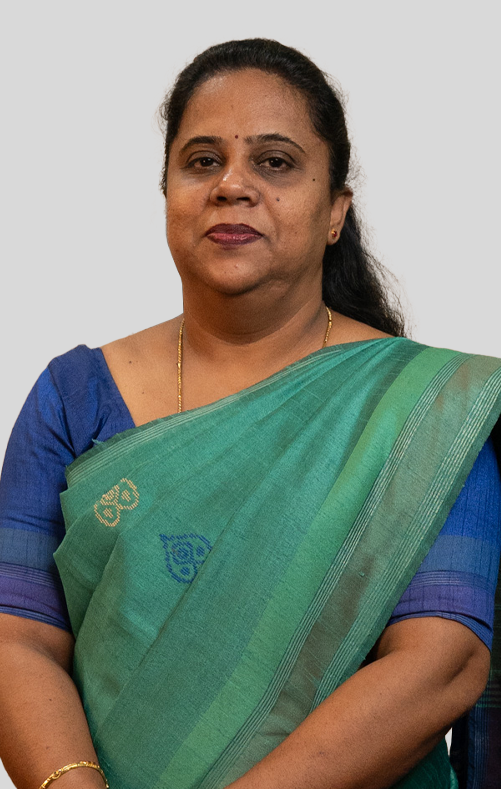
Dr. Sharada T

Assistant Professor

M.S Commn, Ph.D. NET

Ms. Sandya S.C

Assistant Professor

Ms. Shwetha P.B

Assistant Professor